
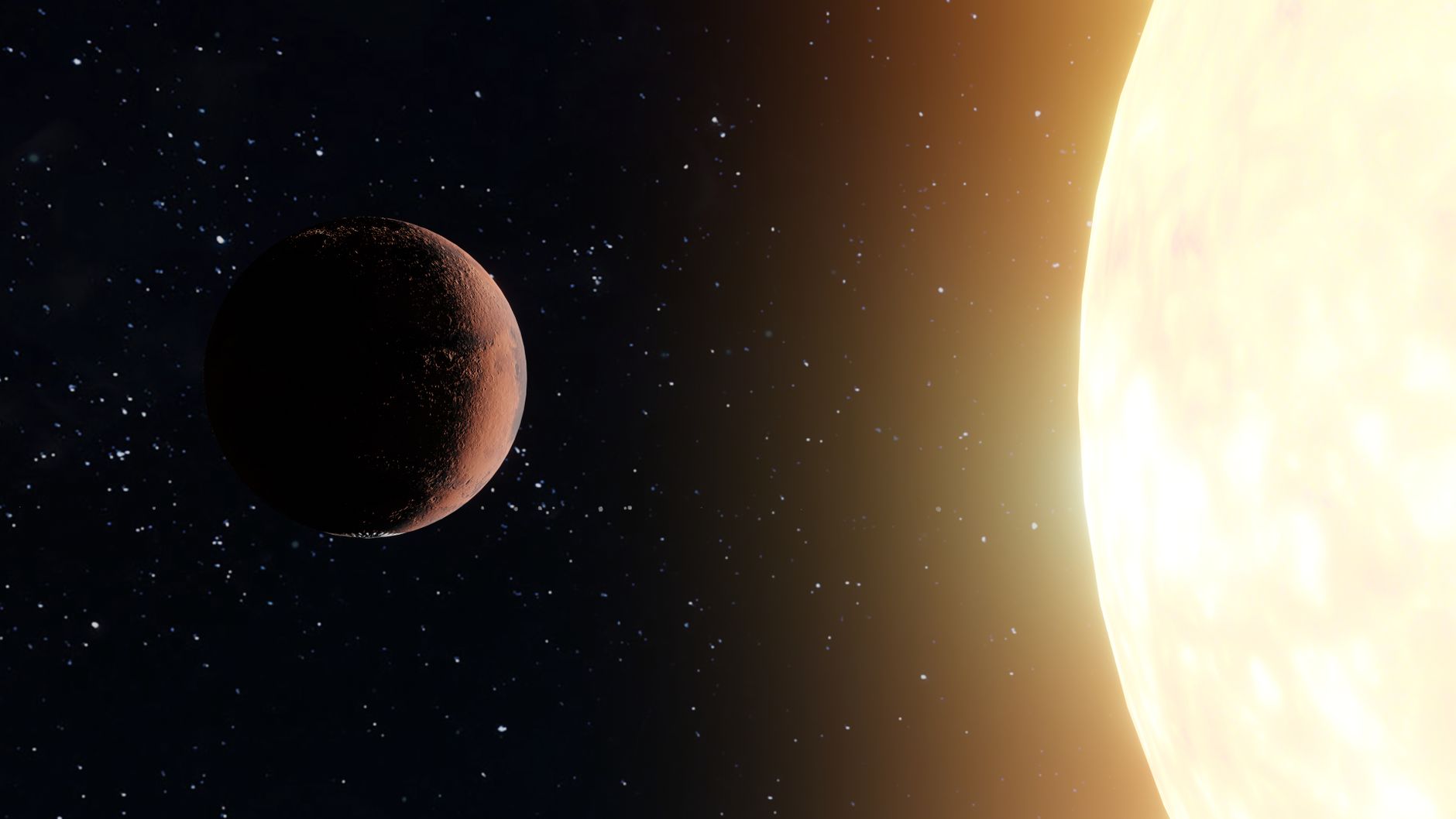
Solar System fate is being reconsidered with a groundbreaking new calculation that could alter our understanding of cosmic destiny.
Understanding the Solar System fate
The fate of the Solar System has long been a subject of scientific inquiry and speculation. Recent advancements in astronomical calculations have brought new insights into this complex topic. Understanding the Solar System’s fate requires a multi-faceted approach, considering various factors that influence its long-term evolution.
Key elements that play a role in determining the fate include:
- The Sun’s lifecycle: As our star ages, it will eventually exhaust its nuclear fuel, leading to significant changes in the Solar System.
- Gravitational interactions: The gravitational pull of planets, asteroids, and comets can alter the orbits and stability of celestial bodies.
- Dark matter and energy: These mysterious components of the universe may have unforeseen effects on the Solar System’s trajectory.
Researchers are now employing advanced computational models to simulate these interactions and predict the long-term outcomes. The implications of these findings could challenge existing theories about the Solar System’s fate and provide a deeper understanding of our cosmic environment.
The implications of new calculations
The implications of recent calculations on the Solar System fate are profound and far-reaching. As scientists delve deeper into the dynamics of celestial bodies, several key factors have emerged that could reshape our understanding of cosmic evolution.
Firstly, these new calculations suggest that the gravitational interactions between planets may lead to unexpected outcomes, potentially altering the orbits of major celestial bodies. This could impact everything from planetary climates to the stability of satellite systems.
Furthermore, researchers have identified the possibility of “planetary migration,” where planets shift positions over astronomical timescales. Such movements could redefine the structure of our Solar System, leading to a scenario where Earth-like planets may not remain in the habitable zone.
Additionally, the new models highlight the importance of understanding the role of external forces, such as nearby stars passing through the Oort Cloud, which could eject comets and asteroids into the inner Solar System. This has implications not only for planetary safety but also for the potential delivery of organic materials to Earth.
In summary, the recalibration of our Solar System fate could offer fresh insights into not just our cosmic neighborhood, but also the broader universe.
How this could rewrite cosmic theories
Recent advancements in astronomical calculations have the potential to significantly alter our understanding of the Solar System fate. The new models suggest that the long-accepted theories regarding the life span of our Solar System may be fundamentally flawed. As scientists delve deeper into these calculations, several implications arise that could reshape cosmic theories.
One major consideration is the stability of planetary orbits over vast time scales. The new data indicates that interactions between celestial bodies could lead to unexpected outcomes, challenging the notion that the Solar System will remain largely unchanged for billions of years.
Additionally, researchers are now examining the role of external factors, such as nearby stellar events, which may influence our Solar System in ways previously unaccounted for. These findings prompt a reevaluation of how we perceive the long-term evolution of planetary systems.
As scientists disseminate these new calculations, the academic community is abuzz with excitement. The prospect of rewriting the narrative of the Solar System fate opens doors to further exploration and research, fostering a deeper understanding of our cosmic neighborhood.
Expert opinions on the findings
Experts in astrophysics are weighing in on the recent calculations concerning the Solar System fate, emphasizing the potential shifts in our understanding of cosmic evolution. According to Dr. Emily Sanders, a prominent astrophysicist at the Galactic Institute, “These findings suggest that the Solar System may experience a much longer lifespan than previously thought. This could have profound implications for our understanding of planetary development.”
Similarly, Dr. Rajiv Kumar, an expert in orbital dynamics, noted, “The intricate calculations reveal that gravitational interactions among celestial bodies may delay certain catastrophic events. This opens up new avenues for research into the future of not only our Solar System but also others in the galaxy.”
However, not all experts are convinced. Dr. Lisa Chen, a leading cosmologist, cautioned, “While these calculations are promising, it’s essential to approach them with a degree of skepticism. The complexities of our universe mean that predictions can often be inaccurate.”
As discussions continue, many researchers agree that the implications of these calculations could indeed transform the paradigm of astrophysics, prompting a reevaluation of how we view the Solar System fate.
Photo by Zelch Csaba on Pexels
Where this came from
Tech Explorist · Solar system future
You might also like
Dhruv Rathee YouTube Journey: The Best Proven Steps · ZP TPs Elected Representatives: The Worst Five-Year Gap · Hurricane Isaias Impact: Worst Areas to Prepare for Damage

Leave a Reply